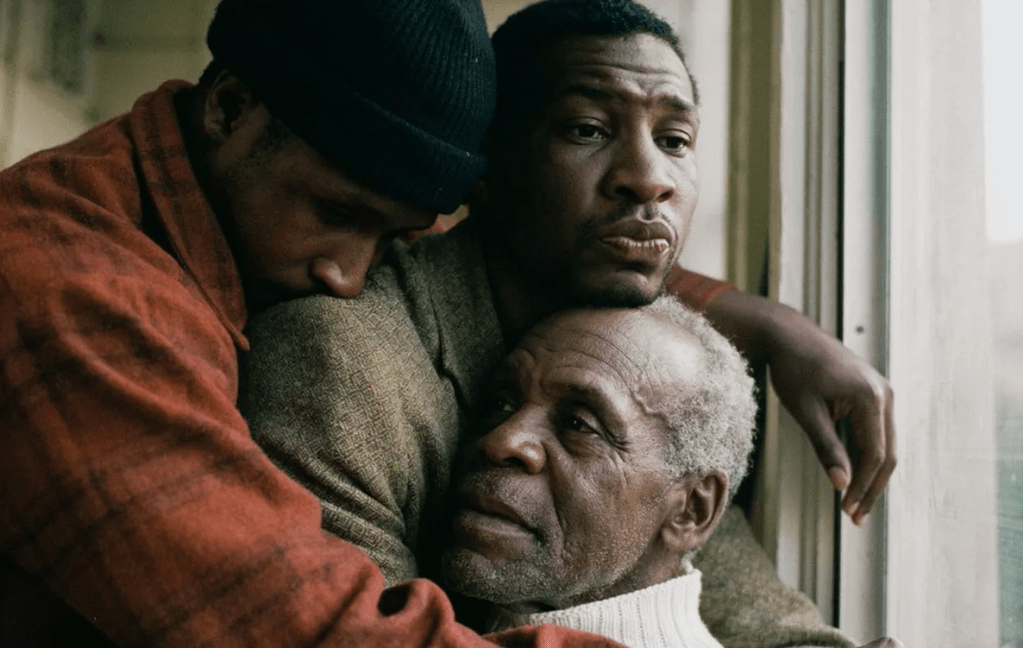
Life changes through the ages and like a spectator watching from the distance, you travel through the story of The Last Black Man in San Francisco.
Jimmie Fails is the lead with a soft and somber look on his face, showing his heart that is so attached to pride in his grandfather’s postbellum craftsmanship. While tirelessly working to keep the roof over his head, you see the metaphorical and literal toxic waste that pollutes the community. There is a gem, the house that stands as an immortal timepiece of heritage and beauty in a city that is so ramshackle.
Giving and creating through love carries the weightlessness of hope to fuel his dreams. That’s what Jimmie’s character does, and it outshines all the disparity of hateful words and actions around him.
Following the rhythm of the musical score alongside the sweeping path of the camera is the carefully calculated speed of this movie. The Last Black Man in San Francisco has a tempo that matches the pulse of what the viewer should feel: slow, when you need to slide certain things into focus, and rapidly in motion, when a pivotal moment is on the horizon.
It seems as though his friend Montgomery can see all of beauty in the world and chooses to dismiss what is ugly and emotionally draining. And his grandfather’s blindness may very well be an allegory for this, thus the pure kindness in his friendship with Jimmie.
Symbolically, the structure they refurbish together is in “Fillmore”, and they are filling it with more light and positivity.
Sometimes the curtains around the stage of a play fall away, and masterful acting takes place, pulls you in, and brings you into a temporary home that you need to live in. That is the artful magic of this film and I genuinely enjoyed it.
Rating: 7.7
 Through the Looking Glass